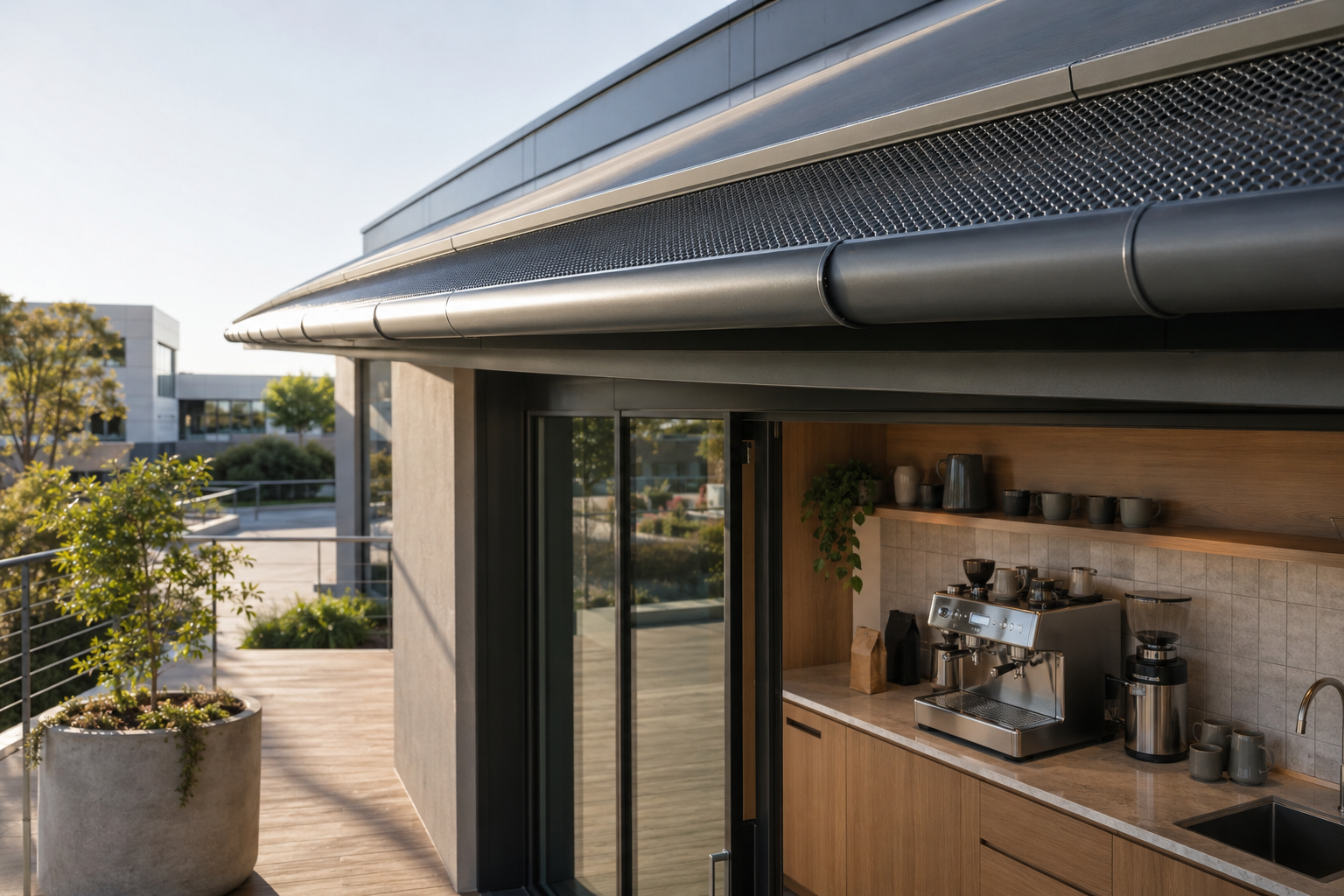
Maintaining a commercial property involves more than responding to visible faults, as the most valuable improvements often protect the building while making it more comfortable for occupants. A suitable gutter guard commercial system can support roof drainage and reduce the accumulation of leaves and larger debris. Inside the building, businesses that order coffee beans online can provide fresher workplace coffee while gaining greater control over flavour, roast and supply. For offices seeking a more refined espresso experience, a rocket appartamento coffee machine may become part of a well-planned staff kitchen or client area.
Protecting the Building from Above
Commercial roofs can collect substantial volumes of water during heavy rain. When leaves, twigs, seed pods and windblown material enter the gutters, they can restrict drainage and cause water to pool or overflow.
Overflowing water may stain exterior walls, damage landscaping or affect entrances and pedestrian areas. If the problem continues, moisture can enter vulnerable sections of the roofline and contribute to corrosion, timber deterioration or internal water damage.
A correctly selected protection system can reduce the amount of solid material entering gutters and downpipes. It does not eliminate maintenance, but it may make inspections and cleaning more manageable. Fine sediment and decomposed organic matter can still collect over time, so gutters should remain part of the property’s scheduled maintenance program.
The most appropriate material will depend on the building, roof type and surrounding environment. Properties near gum trees may require fine mesh capable of limiting the entry of narrow leaves and blossoms. Coastal buildings should consider corrosion resistance, while properties in bushfire-prone locations need materials appropriate for local conditions and applicable building requirements.
Existing drainage should be inspected before any system is fitted. Incorrect gutter falls, damaged joints, rust and undersized downpipes cannot be corrected by covering the gutter. Completing necessary repairs first gives the new installation a stronger foundation.
Improving the Everyday Workplace Experience
While exterior maintenance protects the physical property, internal facilities shape how staff and visitors experience it each day. Kitchens, break rooms and reception areas are frequently used spaces, yet they can be overlooked during workplace planning.
Quality coffee can be a modest but meaningful addition. It gives employees a convenient reason to take a proper break and provides businesses with a simple way to welcome clients, candidates and suppliers. A well-organised coffee station can also reduce unnecessary trips away from the workplace during the day.
The available space should guide equipment selection. A compact office kitchen needs enough room for the machine, grinder, cups, milk and cleaning accessories without blocking sinks or food-preparation areas. A larger client lounge may allow for a dedicated counter with storage underneath.
Power capacity, water access and ventilation should be reviewed before installing equipment. Even a visually attractive setup can become inconvenient if it relies on overloaded power boards or requires staff to carry water across the room.
Choosing Beans for Different Preferences
Workplaces usually serve people with a broad range of tastes. Some prefer a strong espresso, while others choose milk-based drinks or a longer black coffee. A balanced medium roast is often a practical starting point because it can provide enough body for milk while remaining approachable when served black.
The roast date should be checked when purchasing beans. Coffee changes after roasting as gases escape and flavours develop. Beans that are extremely fresh may be difficult to extract consistently, while older coffee can lose aroma and taste flat.
Storage also influences quality. Beans should be kept in a sealed container or resealable bag away from heat, moisture and direct sunlight. Placing them beside a kettle, oven or sunny window exposes them to temperature changes that can accelerate flavour loss.
Ordering a realistic quantity helps reduce waste. Smaller offices may benefit from more frequent deliveries rather than holding several months of stock. Larger workplaces can purchase more at once if the beans will be used while they remain fresh.
Creating a Consistent Coffee Routine
Good equipment performs best when it is supported by a repeatable process. Grinding immediately before brewing preserves more aroma and allows the grind size to be adjusted for the coffee being used.
A burr grinder is generally preferred because it produces more consistent particles than a blade grinder. For espresso, small changes to grind size can significantly affect how quickly water moves through the coffee. A shot that runs too quickly may taste thin or sour, while one that runs too slowly can become bitter or drying.
Staff responsible for preparing drinks should understand a few simple steps: use a consistent dose, distribute the grounds evenly, tamp level and keep the basket clean. Basic instructions placed near the station can reduce mistakes without turning coffee preparation into a complicated process.
Milk should be stored at the correct temperature and returned to the refrigerator promptly. Steam wands need to be wiped and purged after every use to prevent residue from hardening around the tip.
Planning for Cleaning and Maintenance
Both exterior drainage systems and indoor coffee equipment require ongoing care. Treating either improvement as maintenance-free can shorten its useful life and reduce its value.
Roof inspections should check for accumulated debris, loose mesh, damaged gutters and obstructed outlets. Inspection frequency will depend on nearby vegetation, seasonal conditions and the design of the building.
Coffee equipment needs daily cleaning of the portafilter, basket, steam wand and drip tray. Depending on the machine, regular backflushing may also be required. Mineral deposits can restrict water flow, so water quality and filtration should be considered according to local conditions and manufacturer guidance.
A clear schedule assigns responsibility and prevents small tasks from being forgotten. Facility managers can include roof inspections in their broader property program, while a kitchen roster or nominated staff member can oversee everyday coffee-station care.
Looking at Long-Term Value
The best commercial upgrades solve practical problems without creating unnecessary complexity. Roof protection should be durable, compatible with the existing building and accessible for future inspections. Coffee facilities should suit the number of users, the available space and the willingness of staff to maintain them.
Upfront price is only one part of the decision. Installation quality, replacement parts, warranties, cleaning requirements and expected service life all influence long-term value.
By considering both building performance and occupant experience, property managers can create workplaces that are protected, functional and welcoming. Thoughtful upgrades support reliable operations while improving the everyday workplace experience for staff and visitors.